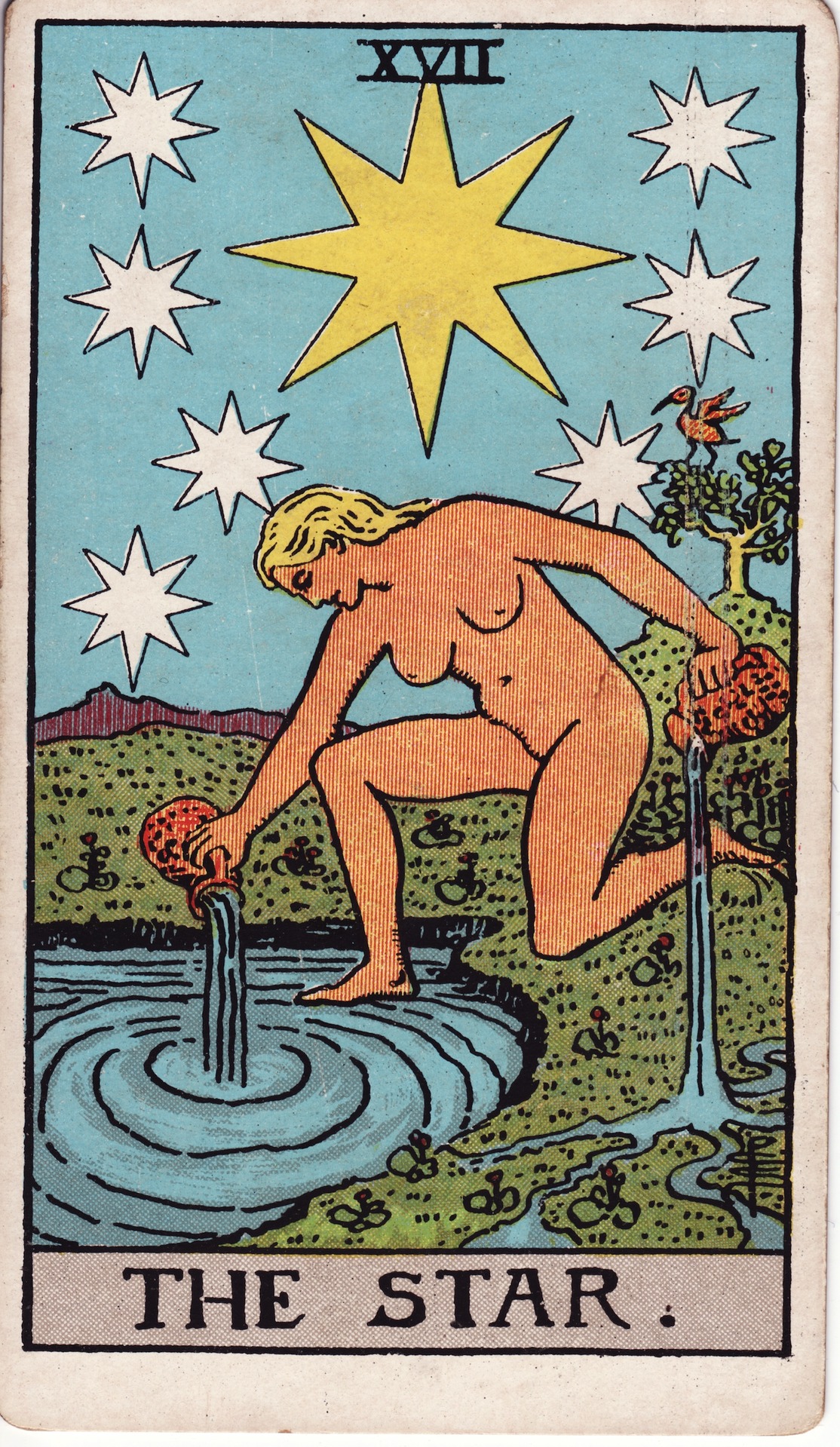
 The Star
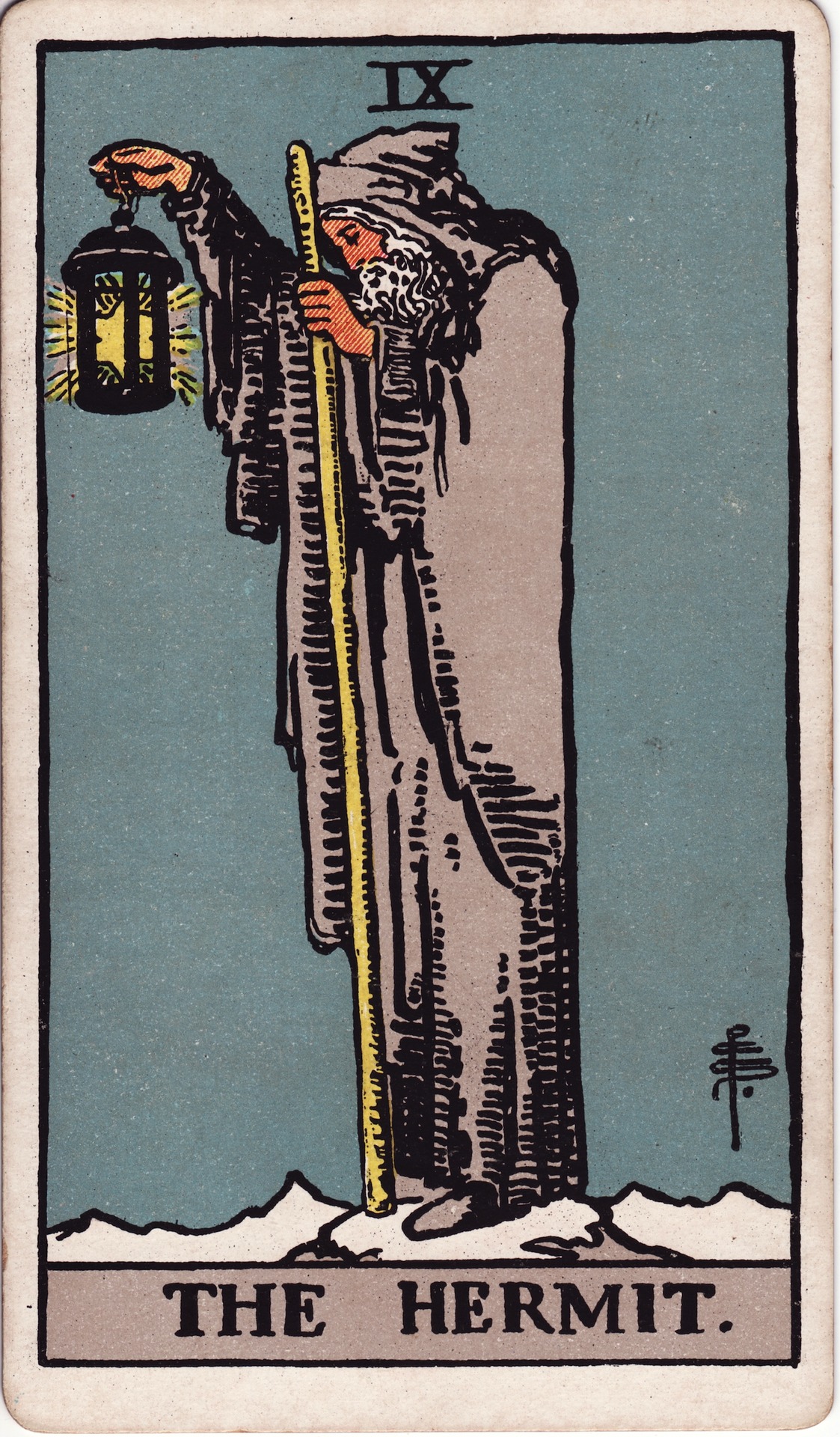 The Hermit
One card: one angle to consider
Use one card when the question is small or you want a brief journal entry. Ask “What deserves my attention?” or “What angle have I not considered?” Notice a detail in the image before reaching for a fixed meaning.
Write a possible connection and a question it leaves open. You can finish there. The free Ask A Card tool draws one random card, with no repeats during the visit; it does not simulate a three- or five-card spread.
Three cards: name, notice, try
This layout keeps the reflection close to your own observations. Give each position a job before shuffling your physical deck, then draw three without replacement.
- What I can name: the part of the situation I have observed.
- What I may be overlooking: an assumption, need or alternative.
- What I can try next: a bounded action within my control.
Five cards: a situation with several layers
Use five positions when one decision has both practical and emotional layers. Read the positions together. A card in the support position can prompt a different thought from the same card in the constraint position.
- The core tension: what feels unresolved?
- Available support: what resource might help?
- A constraint: what trade-off must remain visible?
- My agency: what part can I influence?
- A reversible next step: what can I try and review?
Worked example: preparing for a conversation
Fictional question: “What should I consider before asking to change a shared plan?” Before drawing, the person notes the current agreement, their changed availability and the fact that the other person has not been asked.
In a three-card reflection, a symbol of balance in the first position might prompt a review of the original agreement. An image of isolation in the second could suggest checking an assumption about asking for help. A practical-work image in the third might prompt writing a specific alternative. These are possible interpretations, not evidence of what the other person will say.
The action is to propose a concrete change and listen. In a five-card layout, support and constraints get separate space; that is useful only if those distinctions help the actual question.
When a smaller spread is better
If you cannot explain what an additional position contributes, leave it out. A large spread can make it easier to find whichever story you already hoped to hear. Stop when you have a useful question or a practical next step.
Avoid redrawing until the cards appear reassuring. Keep the first entry, record uncertainty and check the real-world information. If the topic involves safety, health, money or legal obligations, use relevant evidence and qualified help.
Use a worksheet before interpreting
The Question Kit has blank lines for your question, facts, assumptions, spread positions and a hindsight note. It is a worksheet, not a personalized reading or a dictionary of all 78 cards.
If you prefer a written PDF prepared around your context, inspect the actual reading sample. Check the card count, page count, edition and delivery terms on the reading page before ordering.
Common questions
Is a five-card spread better than one card?
Only if its separate positions help your question. More cards add possible connections and complexity; they do not verify an outcome.
Does Ask A Card offer a free three-card generator?
The current free tool draws one card. You can use the three- and five-position worksheets with your own deck; paid PDF readings are separate products.
Must I read cards as past, present and future?
No. You can assign reflective positions such as observations, overlooked factors and a next step. Define them before drawing and keep them consistent.
Explore the matching reading
Deep Clarity: personalized PDF. Explore the sample, choose an edition and order on askacard.com.
Free printable · 3 pages
A better question.
A note worth keeping.
The Question Kit gives you a question planner, one-, three- and five-card layouts, and a page to revisit what you learned. Keep it on paper, at your own pace.
Download the free Question KitNo email or account required. Reflection, not prediction.
Want a reading around your question? Find your fit.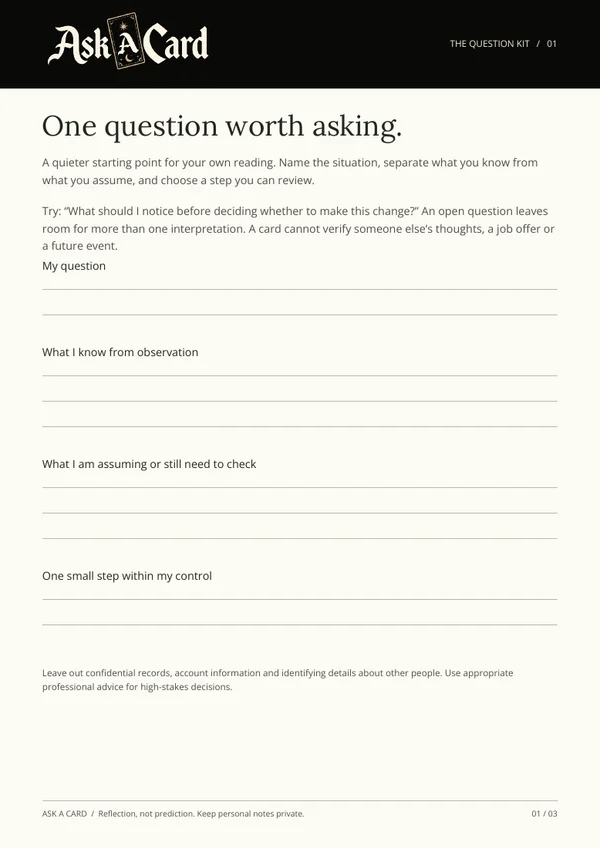
Continue reading
Method: symbolic reflection. Examples are fictional and interpretations are possibilities, not verified predictions. Tarot is for reflection and entertainment, not professional advice.